

Triceps Extension: Technique, Variations, and Differences from the French Press
The triceps extension is one of the most used movements to work the back of the arm. Although people often talk about “doing triceps” in general, not all variations stimulate the muscle equally or require the same technique.
This group includes exercises like the French press, the skull crusher, the triceps extension on the pulley, the triceps kickback, or the overhead extension. They all share a basic idea: extending the elbow against resistance, but they vary in angle, equipment, and which triceps head receives the most stimulus.
In this guide, we see which muscles the triceps extension works, how to perform each variation, what mistakes to avoid, and when to choose pulley, bar, dumbbell, or bench.
Which muscles does the triceps extension work?
The triceps is made up of three heads: long, lateral, and medial. All participate in elbow extension, but some variations emphasize one area more than another.
- Long head: is heavily involved when the arm is raised or above the head. That’s why it usually receives more stimulus in overhead extensions or some barbell exercises.
- Lateral head: is very visible on the outer part of the arm and works strongly in pushes and pulley extensions.
- Medial head: acts as a stabilizer and participates in almost all extension variations.
- Forearm and grip: help control the bar, rope, or dumbbell, although they should not dominate the movement.
The key is to keep the elbow stable. If the shoulder moves too much, the exercise loses isolation and no longer focuses solely on the triceps.

Triceps extension on cable
The triceps extension on the pulley is one of the easiest variations to control and one of the most commonly used in gyms. It is also known as pushdown or high pulley triceps.
To do it correctly:
- Starting position: stand facing the high pulley, with a stable torso and feet firmly planted.
- Elbows: keep them close to the body throughout the movement.
- Downward movement: push the rope or bar down until the elbows are extended.
- Control: avoid swinging or leaning too far forward.
- Upward movement: let the grip return in a controlled manner without losing tension.
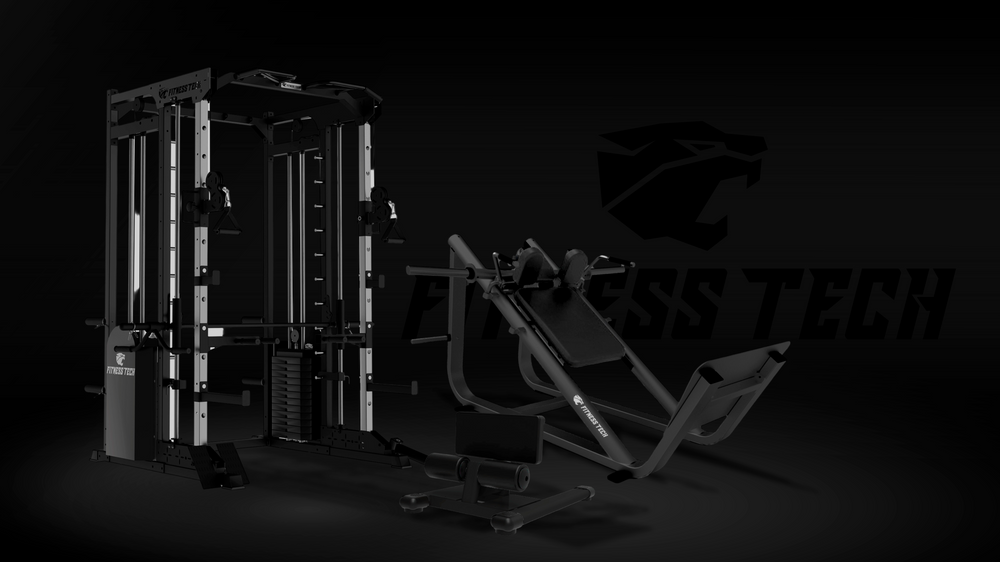
For this variation, you can use functional pulley stations or a high pulley station. Crosstraining grips, such as the triceps rope or straight bar, also work very well because they allow you to adjust the grip according to wrist and elbow comfort.
French press and skull crusher
The French press is one of the classic variations for working triceps with a barbell. It is also known as the skull crusher, especially when performed lying down and the bar lowers toward the forehead or slightly behind the head.
The execution should be controlled:
- Starting position: lie on a bench with the bar over your chest and arms extended.
- Elbows: keep them pointing upwards without flaring out too much.
- Downward movement: bend the elbows and bring the bar toward the forehead or slightly behind the head.
- Upward movement: extend the elbows back to the starting position without locking them abruptly.
For this variation, EZ bars are usually more comfortable than a straight bar, as they reduce wrist tension and allow a more natural grip.
The main difference with the pulley is that the French press usually feels more demanding in the lower part of the movement and requires more joint control. That’s why it’s best to start with a light load and prioritize technique.

Triceps extension with barbell
The barbell triceps extension can be done lying down, sitting, or standing, depending on the focus. When done overhead, it usually involves the long head of the triceps more.
It’s a useful variation if you want to work with more load than with dumbbells, but it also requires good shoulder mobility and elbow control.
The EZ bars are again an interesting option, especially if you feel discomfort with a straight bar. The angled grip usually allows a more comfortable position and more stable execution.
Triceps kickback
The triceps kickback is usually done with a dumbbell and aims for a very marked contraction at the end of the movement.
To do it correctly:
- Position: lean the torso forward and keep the back stable.
- Elbow: keep it close to the body and fixed.
- Extension: move the dumbbell backward until the arm is fully extended.
- Return: return slowly without letting the weight drop.
The dumbbells for home are a practical option for this variation because you don’t need much weight. In fact, using too much weight usually causes the shoulder to move and the triceps to lose focus.
The triceps kickback works very well as a finishing exercise, with controlled repetitions and focusing on good muscle connection.

Overhead triceps extension
The overhead extension can be done with a dumbbell, rope on a pulley, or bar. Its main advantage is that it places the arm in an elevated position, increasing the stretch of the long head of the triceps.
It’s an interesting variation to complete triceps work, but it requires good control of the lower back and avoiding opening the elbows too much.
If you do it with a pulley, the tension is usually more continuous. If you do it with a dumbbell, it’s easier to set up at home but requires more control of the movement.
Common mistakes in triceps extension
Most errors occur from using too much weight or moving the shoulder more than the elbow.
- Opening the elbows too much: reduces control and can cause discomfort.
- Moving the shoulders: the extension should come mainly from the elbow.
- Using momentum: swinging the body makes the triceps work less.
- Shortening the range of motion: there’s no need to lock out aggressively, but use a wide and controlled range.
- Bending the wrists: wrists should remain firm and aligned.
- Lowering without control: the eccentric phase is also part of the exercise.
The sign you’re doing it right is feeling tension in the triceps without pain in elbows, shoulders, or wrists.
Which variation to choose?
Each variation makes sense depending on your goal and available equipment.
| Variation | Best for | Common equipment |
|---|---|---|
| Triceps extension on cable | Control, constant tension, and simple technique | High pulley and rope/bar |
| French press / skull crusher | Intense work with bar and greater stretch | EZ bar and bench |
| Triceps kickback | Final isolation and control with light load | Dumbbell |
| Overhead extension | Emphasis on the long head of the triceps | Dumbbell, cable, or bar |
For a balanced routine, you can combine a cable variation with another where the arm is overhead. This way, you work the triceps from different angles without needing too many exercises.
Recommended sets and repetitions
Triceps extension usually works better with moderate loads and good technique. There is no need to seek maximum weights.
| Goal | Sets and repetitions | Recommendation |
|---|---|---|
| Technique | 2-3 sets of 12-15 repetitions | Use light weight and learn to fix the elbows. |
| Hypertrophy | 3-4 sets of 8-12 repetitions | Maintain tension and control the lowering phase. |
| Finishing work | 2-3 sets of 12-20 repetitions | Ideal with rope, triceps kickback, or cable. |
The French press can be used as the main variation, while the cable or triceps kickback work well as complementary exercises.
The triceps extension is a basic exercise to develop stronger and more balanced arms. The key is to choose the right variation, keep the elbows stable, and control the range of motion. Whether using a cable, EZ bar, or dumbbell, the goal is not to move more weight at any cost, but to ensure the triceps does the work in every repetition.


Leave a comment