

Make the most of your gym pulleys: Fundamental exercises
The best pulley exercises for each muscle group
Cable machines are a very versatile tool in the gym. They allow controlled, safe, and very effective work for both beginners and advanced users. However, many people are reluctant to use them. That’s why today we will talk about pulleys and how to get the most out of them in your strength training.
What are pulleys used for in the gym?
Cables allow training in different planes of movement and adapting the pulling angle according to the exercise, something not so easy with free weights. Among their most notable benefits are:
Muscle isolation: you can focus the work on specific muscles.
Lower injury risk: being a more guided movement, it is ideal for rehabilitation or safe training.
Versatility: with a single machine you can work chest, back, arms, shoulders, legs, and even abs.
Smooth progression: the load can be precisely adjusted
Where can you find gym pulleys?
You have two main options:
1. In commercial gyms
Most gyms are equipped with cable stations, whether high pulleys, low pulleys, or full crossovers.
2. For home use
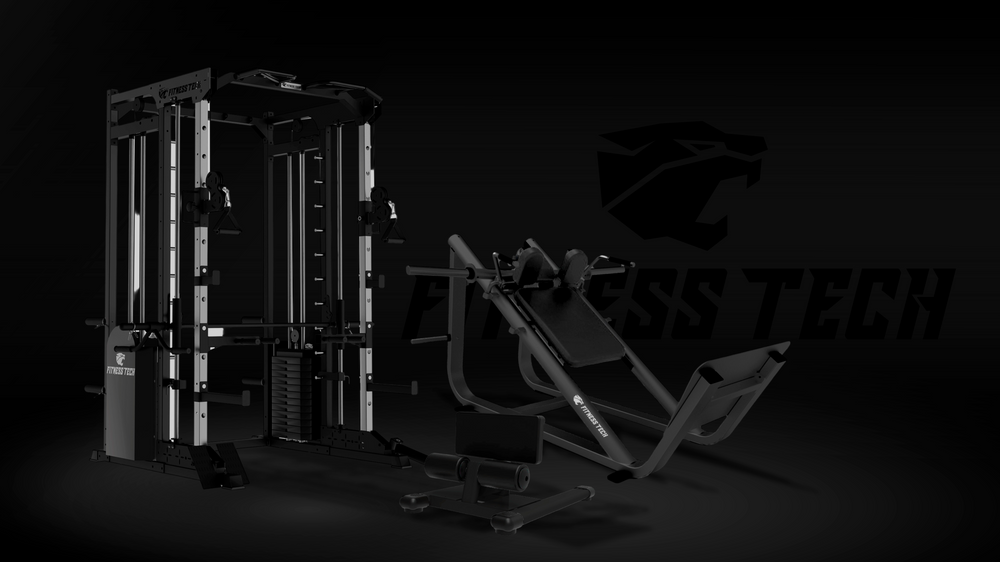
If you want to have one in your home gym, you can find specific cable stations or multipower machines; at Fitness Tech we offer some like:

The best pulley exercises (by muscle group)
Pectorals
High pulley crossover: works the middle and lower part of the pectoral.
Low pulley crossover: focused on the upper portion of the chest.
Pulley press with neutral grip: ideal for working on inclined planes.
Back
Low pulley row: focused on lats and rhomboids.
Lat pulldown: perfect for the latissimus dorsi.
High pulley pull-over: excellent for isolating the back without involving the arms.
Shoulders
Face pull: essential for posterior deltoids and shoulder health.
Lateral raises on low pulley: very useful for maintaining constant tension.
Arms
Low pulley curl with straight bar: ideal for biceps.
Rope curl: activates the long head of the biceps more.
Triceps extensions with rope or bar: to work all heads of the triceps.
High pulley contraction: to focus on the final phase of the movement.
Legs
Although less common, you can also work on:
Glute kickback on low pulley
Adduction and abduction on pulley
Unilateral hamstring curl on pulley
Why choose pulleys?
They allow maintaining constant tension
They prevent unnecessary overloads
They are perfect for adding variety to any routine


Leave a comment